NDIS Change of Circumstances: A Provider's Complete Guide
Understand what triggers an NDIS change of circumstances, how to report it, and what providers must do to maintain compliance and keep care on track.



An NDIS change of circumstances is one of the most consequential processes a registered NDIS provider will deal with. When a participant's situation shifts, their funding, support requirements, and service agreements may all need updating. Understanding what triggers an NDIS change of circumstances, who is responsible for acting on it, and what practical steps providers must take is essential for maintaining both compliance and quality care.
This guide covers the full NDIS change of circumstances process from a provider's perspective: what qualifies, how it is reported, what happens to the participant's plan, and what providers must do at each stage.
At a glance: An NDIS change of circumstances is a formal process for notifying the NDIA that a participant's situation has changed significantly enough to affect their disability-related support needs. It can trigger a plan variation (a targeted update to the existing plan) or a plan reassessment (a full review resulting in a new plan).
Table of Contents
- What Is an NDIS Change of Circumstances?
- What Triggers an NDIS Change of Circumstances?
- Who Is Responsible for Reporting a Change of Circumstances?
- How to Report an NDIS Change of Circumstances
- What Happens After an NDIS Change of Circumstances Is Reported?
- Provider Responsibilities When a Participant's Circumstances Change
- How an NDIS Change of Circumstances Affects Rostering and Staffing
- Updating Service Agreements After a Change of Circumstances
- Documentation Requirements for Providers
- Managing Multiple Participant Changes With Workforce Software
- Conclusion
What Is an NDIS Change of Circumstances?
An NDIS change of circumstances occurs when a participant's situation changes significantly enough to affect their disability-related support needs or the funding in their current plan. Under the NDIS Act 2013, participants, their nominees, or their authorised representatives are required to notify the NDIA when a relevant change occurs.
The NDIA recognises two formal categories:
Change in details: A smaller administrative change such as updated contact information, a switch in funding management type, or a change in support provider. These are typically handled through a plan variation, which updates parts of the existing plan without replacing it entirely.
Change in situation: A more significant change to the participant's needs, living arrangements, informal supports, or functional capacity. These usually trigger a full plan reassessment, resulting in a new plan.
For providers, understanding the difference between these two categories is important because the operational consequences, timelines, and documentation requirements vary considerably.
What Triggers an NDIS Change of Circumstances?
Not every shift in a participant's day-to-day life constitutes a formal NDIS change of circumstances. The NDIA looks for changes that are significant, ongoing, and directly related to the participant's disability support needs. These are the most common triggers.
Medical or Health Changes
A significant deterioration or improvement in a participant's health condition or functional capacity can trigger an NDIS change of circumstances. This includes new diagnoses, acquired injuries, significant recovery from illness, or progressive conditions that have advanced since the last plan was approved. The NDIA generally requires supporting evidence from treating health professionals, such as occupational therapists, physiotherapists, or speech pathologists.
Changes to Living Arrangements
Moving into or out of supported independent living, relocating to a different region, leaving an aged care facility, or transitioning from a family home to independent accommodation are all examples of living situation changes that can trigger an NDIS change of circumstances. These changes often affect the type, frequency, and volume of supports required.
Changes to Informal Support Networks
If a participant's main informal carer becomes unavailable due to illness, injury, death, or a significant change in their own circumstances, the participant's disability-related support needs may increase substantially. The NDIA recognises carer unavailability as a qualifying change of circumstances, particularly where the carer was previously providing significant unpaid support that reduced the participant's funded support requirements.
Changes to Goals or Participation
Starting or leaving employment, beginning or finishing a course of study, or developing new life goals can also trigger an NDIS change of circumstances if the existing plan no longer reflects what the participant needs to achieve those goals. NDIS plans are structured around individual participant goals, so a significant shift in direction may require a plan adjustment.
Who Is Responsible for Reporting a Change of Circumstances?
Under the NDIS Act 2013, the responsibility for reporting an NDIS change of circumstances lies primarily with the participant, their nominee, or their authorised representative. Providers, including support coordinators, cannot submit a plan reassessment request on a participant's behalf. However, for plan variations (the smaller category of change), a participant can consent to a support coordinator requesting the variation on their behalf.
The role providers play is in the supporting process. When providers observe changes in a participant's functional capacity, behaviour, support needs, or living situation, they should document those observations in progress notes and discuss them with the participant and their support coordinator. Good documentation from providers often forms part of the evidence the NDIA uses when assessing an NDIS change of circumstances.
Providers must not use changed circumstances as a reason to unilaterally alter services without the participant's knowledge and consent. The appropriate response is to document, discuss, and support the participant to contact the NDIA when warranted.
How to Report an NDIS Change of Circumstances
Participants or their representatives can report an NDIS change of circumstances through several official channels:
- Calling the NDIA on 1800 800 110
- Contacting their local area coordinator (LAC) or my NDIS contact
- Logging into the NDIS service hub and submitting a change of details or change of situation request online
- Writing to the NDIA at GPO Box 700, Canberra ACT 2601
- Visiting a local NDIS office in person
For a plan reassessment (change in situation), the participant must complete the official plan reassessment request form, available from the NDIS website. The request should be accompanied by supporting evidence, typically recent reports from allied health professionals. Evidence should generally be less than four months old and dated after the current plan was approved.
The NDIA has up to 90 days to decide on a plan reassessment request. During that period, the participant's current plan remains in effect and providers should continue delivering services under the current service agreement.
Providers can assist participants by preparing relevant reports, writing progress notes that capture observed changes, and providing written statements about how current supports are or are not meeting the participant's needs.
What Happens After an NDIS Change of Circumstances Is Reported?
Once an NDIS change of circumstances is reported, the NDIA assesses the information and determines the appropriate response. There are three possible outcomes.
Plan reassessment: A full review results in a new plan with updated funding, support budgets, and potentially a different plan management type. All aspects of the plan may change.
Plan variation: A targeted update to the existing plan that adjusts specific funding lines or support details without replacing the whole plan. The participant keeps their current plan with modifications.
No change: The NDIA determines that the evidence does not support a significant, ongoing change to the participant's disability-related support needs, and the existing plan continues to its scheduled reassessment date.
Providers should be aware that an NDIS change of circumstances does not automatically result in increased funding. From 1 October 2026, the NDIA applies tighter criteria, and budgets for social and economic participation supports may be reduced at reassessment depending on the participant's situation and evidence.
If the NDIA declines the reassessment request, the participant has the right to request an internal review of the decision within three months of receiving it. Where a support coordinator is involved, they should support the participant to understand their options.
Provider Responsibilities When a Participant's Circumstances Change
For NDIS providers, an NDIS change of circumstances is not simply an administrative event for the participant to manage alone. Providers have clear responsibilities throughout the process.
Documenting observed changes: Providers must maintain contemporaneous progress notes that record any observed changes in a participant's functional capacity, behaviour, or support requirements. These notes serve as evidence for the NDIA and demonstrate that the provider is monitoring the participant's wellbeing in line with the NDIS Practice Standards.
Communicating with the participant: Providers must discuss any observed changes with the participant and their support network. This includes explaining how a change of circumstances might affect current service delivery and encouraging the participant to contact the NDIA if a formal notification is warranted.
Preparing supporting evidence: Providers can write progress notes, case management summaries, and functional observations that the participant or their support coordinator can include with the reassessment request. While providers cannot lodge the request themselves, well-prepared documentation makes a material difference to the NDIA's assessment.
Reviewing service agreements: Once an NDIS change of circumstances leads to a new plan or a plan variation, providers must review and update their service agreements. Continuing to claim under an outdated service agreement can create compliance issues under the NDIS Practice Standards and may result in overpayments that need to be repaid.
For support coordinators, obligations go further. The NDIS support coordination progress report is a key document for capturing how supports have been coordinated during a period of change, and it forms part of the participant's ongoing evidence record.
How an NDIS Change of Circumstances Affects Rostering and Staffing
A participant's NDIS change of circumstances often has immediate and practical implications for a provider's rostering and workforce management. When a plan reassessment increases a participant's support hours, providers must quickly identify available workers with the right skills and availability. If hours are reduced, providers need to adjust worker schedules without breaching SCHADS Award entitlements such as minimum engagement periods and notice requirements.
Changes to the type of support required are equally demanding. A participant who previously needed only community access support may now require high-intensity daily personal care following a health change. That means providers need workers with appropriate qualifications and experience, and may need to recruit, train, or redeploy staff rapidly.
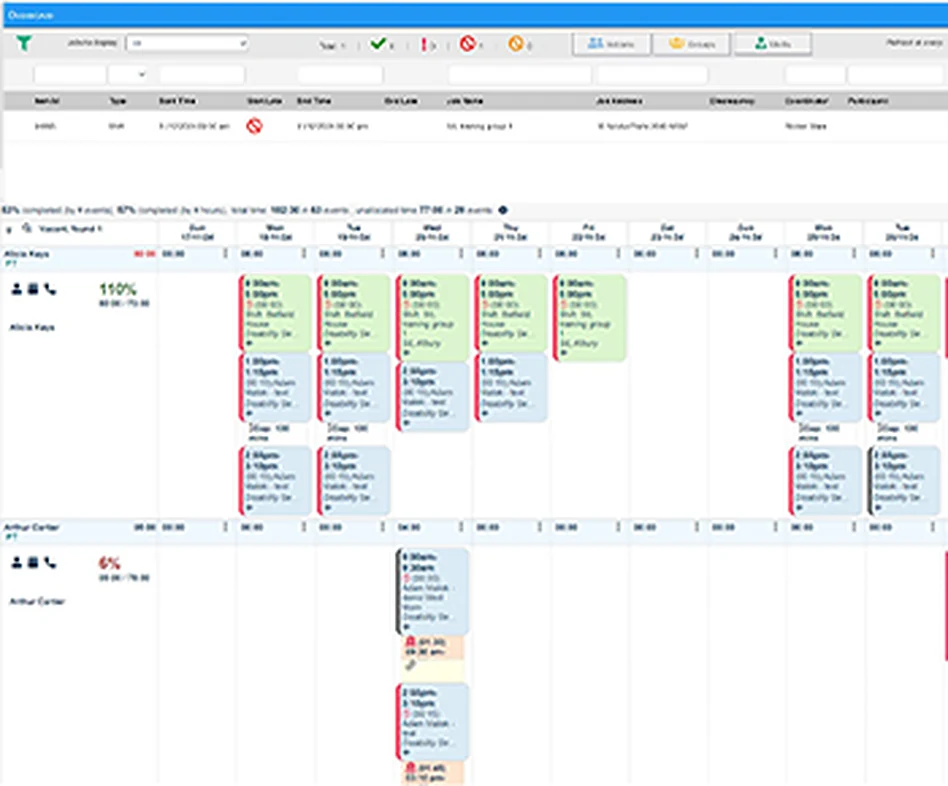
Managing these transitions well requires both clear internal processes and reliable workforce management tools. Purpose-built NDIS rostering software allows providers to respond quickly when participant circumstances change, updating support requirements, reassigning workers, and tracking delivery changes in real time, without disrupting service continuity or leaving workers unexpectedly off shift.
Updating Service Agreements After a Change of Circumstances
A service agreement must accurately reflect the services being delivered and the funding available in the participant's current plan. When an NDIS change of circumstances leads to a new plan, the existing service agreement is no longer current and must be reviewed and updated before the provider continues to claim against the new funding.
The updated service agreement should reflect:
- New support budgets and funding categories from the participant's new plan
- Any new or changed support types, frequencies, or hours
- Updated service rates where applicable
- Revised goals or life outcomes driving the participant's support mix
Providers should give participants and their nominees adequate time to review any changes before signing. Where a support coordinator is involved, they should be included in the review process to confirm that the updated services are consistent with the participant's new plan and goals.
Signing a revised service agreement promptly after a plan change protects both the provider and the participant. It ensures that claims are made against the correct funding lines and that the participant has agreed to the updated services.
Documentation Requirements for Providers
Thorough documentation is fundamental to managing an NDIS change of circumstances effectively and in compliance with the NDIS Practice Standards. Providers must maintain accurate, contemporaneous records throughout the process, including:
- Progress notes capturing observed changes in the participant's support needs or functional capacity
- Incident reports if the change of circumstances is related to a safety event
- Assessment reports prepared by or in collaboration with allied health professionals
- Updated support plans and case management notes
- Copies of all current and superseded service agreement versions
All records must be stored securely, accessible to authorised staff, and retained for the period required under NDIS record-keeping obligations. See the NDIS Commission's guidance on compliance in NDIS service provision for a full overview of documentation standards.
VisiCase's NDIS care management system gives providers a centralised platform for maintaining participant records, tracking support plan changes, and storing service agreement versions, with built-in tools to support audit readiness.
Managing Multiple Participant Changes With Workforce Software
For providers managing large caseloads, handling several NDIS change of circumstances events simultaneously is not uncommon. Without a structured system, the risk of errors, missed service agreement updates, or incomplete documentation increases substantially.
Integrated NDIS care management software brings together rostering, case management, incident reporting, and documentation in one platform. When a participant's plan changes following a change of circumstances, providers can update support requirements, adjust shift schedules, reassign workers, and generate compliance reports without switching between systems. This reduces the risk of service continuity gaps and helps providers stay responsive to participant needs at every stage.
The NDIS reforms introduced in 2026 have tightened rules around budget management and evidence requirements, making efficient internal systems even more important for providers navigating reassessments and plan variations.
Conclusion
An NDIS change of circumstances is a normal part of supporting participants whose lives and needs evolve over time. For providers, managing it well requires more than waiting for the participant's new plan to arrive. It requires proactive documentation, responsive rostering, updated service agreements, and clear communication with participants, support coordinators, and the NDIA.
Providers who have robust internal workflows and reliable technology are better placed to navigate these transitions without disrupting care delivery. If your organisation needs a smarter way to manage participant changes, service delivery compliance, and workforce scheduling, VisiCase offers an integrated platform built specifically for Australian NDIS and aged care providers.
Frequently Asked Questions
What is an NDIS change of circumstances?
An NDIS change of circumstances is a formal notification to the NDIA that a participant's situation has changed significantly enough to affect their disability-related support needs. It can result in a plan variation (a targeted update to the existing plan) or a plan reassessment (a full review and new plan).
An NDIS change of circumstances may arise from changes to a participant's health, living situation, informal support network, goals, or employment status. Not every change qualifies: the NDIA requires the change to be significant, ongoing, and directly related to the participant's disability support needs.
What changes qualify as an NDIS change of circumstances?
Changes that typically qualify include a significant deterioration or improvement in the participant's health or functional capacity, a change in living arrangements (such as moving into or out of supported independent living), the loss or unavailability of a main informal carer, a change in employment or study status, and substantial changes to the participant's goals.
Minor changes, temporary changes, or changes that do not affect disability-related support needs generally do not qualify for a formal NDIS change of circumstances. Requests that are declined by the NDIA are usually those where the change is not significant, is not ongoing, or where the evidence does not clearly link the change to altered support needs.
Who can report an NDIS change of circumstances?
The participant, their nominee, or their authorised representative can report a change of circumstances to the NDIA. For plan variations (smaller changes), a participant can also consent to a support coordinator submitting the variation request on their behalf.
Providers, including support coordinators, cannot submit a plan reassessment request directly on behalf of a participant without specific authorisation. However, providers play a critical supporting role by preparing progress notes, case management summaries, and allied health documentation that the participant or their representative can include with their request.
How do I report an NDIS change of circumstances?
A participant or their representative can report a change of circumstances by calling the NDIA on 1800 800 110, contacting their local area coordinator or my NDIS contact, using the NDIS service hub online, writing to the NDIA at GPO Box 700 Canberra ACT 2601, or visiting a local NDIS office.
For a plan reassessment (a change in situation), the NDIA requires a completed plan reassessment request form, available from the NDIS website. Supporting evidence from allied health professionals should accompany the request and should generally be less than four months old and dated after the current plan was approved.
Can a provider report an NDIS change of circumstances on behalf of a participant?
For plan reassessments, no. Only the participant, their nominee, or their authorised representative can submit the request. For plan variations (smaller changes), a participant can consent to a support coordinator submitting the variation on their behalf.
Where a participant lacks capacity to manage the process themselves and no nominee is in place, providers should seek guidance from the NDIA or the Office of the Public Advocate in their state or territory. Providers should not make informal changes to service delivery in response to participant changes without first consulting the participant and following the formal NDIS change of circumstances process.
What is the difference between a plan variation and a plan reassessment under an NDIS change of circumstances?
A plan variation makes targeted changes to an existing plan without replacing it. It suits smaller or more administrative changes, such as switching funding management type, correcting errors, or adjusting a specific support budget for an urgent need. A plan reassessment creates a whole new plan and applies to significant changes in the participant's disability support needs, living situation, or functional capacity.
The practical difference for providers is significant. A plan variation generally results in minor updates to service agreements and may be resolved quickly. A plan reassessment involves a full review of the participant's situation, can take up to 90 days, and may result in substantial changes to funding, support categories, and service delivery requirements.
What happens to a participant's NDIS plan after a change of circumstances is reported?
The NDIA assesses the information and decides whether to issue a plan variation, conduct a full plan reassessment resulting in a new plan, or decline the request and continue the existing plan to its scheduled reassessment date.
The NDIA has up to 90 days to make a decision on a reassessment request. During this period, the participant's current plan remains active and providers should continue delivering supports under the existing service agreement. If the request is declined, the participant can request an internal review of the decision within three months.
What are a provider's obligations when a participant's circumstances change?
Providers must document observed changes in progress notes, communicate with the participant and their support network, and, once a new plan is issued, review and update the service agreement. Continuing to claim under an outdated service agreement after a plan change creates compliance issues under the NDIS Practice Standards.
Support coordinators also have specific obligations, including supporting the participant to understand their new plan, coordinating with other providers affected by the change, and updating the participant's support management documentation. Providers with a support coordination role should ensure that all coordination activity during a change of circumstances event is captured in contemporaneous notes and progress reports.
How does a change of circumstances affect my service agreement with a participant?
A service agreement must reflect the services being delivered and the funding in the participant's current plan. When an NDIS change of circumstances leads to a plan variation or a plan reassessment resulting in a new plan, the service agreement needs to be reviewed and updated to align with the new funding, support categories, and service frequencies.
Providers should initiate a service agreement review as soon as a new plan is issued. The updated agreement should cover new support budgets, any new or changed support types, updated rates, and any changes to participant goals. Giving the participant and their support network adequate time to review and understand the changes before signing is an important part of the process.
Can an NDIS change of circumstances result in reduced funding?
Yes. A change of circumstances review can result in an increase or a decrease in funding. If a participant's condition has improved, their informal support network has increased, or the evidence does not support the level of funded support in the existing plan, the NDIA may issue a new plan with reduced funding in one or more support categories.
From 1 October 2026, the NDIA has also applied tighter criteria to budgets for social, economic, and community participation supports, and improved daily living skills at reassessment. Providers should make participants aware that requesting a reassessment involves a full review of their plan, and that the outcome may differ from the participant's expectations.