NDIS Funding Periods: A Provider’s Practical Guide
NDIS funding periods release plan budgets quarterly, not upfront. Learn how to fix your claiming rhythm, avoid rejected claims and protect your cash flow.


Ever tried splitting a birthday cake into twelve equal slices? It’s tricky — and so is stretching a year’s worth of NDIS funds across 365 days. Since 19 May 2025, the NDIS has released plan budgets in instalments rather than one annual lump sum, and for most supports those instalments arrive quarterly.
At VisiCase, we’ve been fine-tuning our NDIS finance software to help providers like you adapt. Let’s unpack what NDIS funding periods actually mean and how they shape your day-to-day operations — including the one thing most providers only discover when a claim bounces.
What Are NDIS Funding Periods?
NDIS funding periods are set timeframes that control when portions of a participant’s plan budget become available. Instead of the full budget arriving on day one, funding is released in instalments — usually every three months. The total plan amount does not change. Only the timing changes. Unspent funds roll into the next period within the same plan.
Total funding amount — the full value of a participant’s plan across its whole life. Funding periods do not reduce it.
Funding component — a slice of the plan attached to a support or support group, such as Flexible Core or Improved Daily Living.
Funding period — the interval at which a component is released, and the window in which it is meant to be spent.
Why the NDIS Shifted to Quarterly Funding Periods
Imagine getting your entire annual salary upfront. Sounds great — until mid-July, when unexpected costs leave you scrambling. That’s the challenge many NDIS participants faced under the old system.
NDIS funding periods are not a budget cut — they are a

NDIS Funding Periods: A Provider’s Practical Guide
pacing tool. Participants retain their full funding but access it in smaller, regular chunks. For providers, this means steadier cash flow and fewer “feast or famine” cycles where clients exhaust funds early.
The mechanism sits in Section 33 of the NDIS Act, amended in 2024. Funding periods themselves arrived in October 2024, but every plan carried a single 12-month period, so nothing felt different. The shift to shorter periods from 19 May 2025 is what changed the day job.
Not every support runs on a quarterly cycle
Quarterly is the default, not the rule. The NDIA sets the period per funding component, based on the participant’s circumstances:
| Funding period | Typically applied to | What it means for your scheduling |
| Quarterly (3 months) | Most supports, including Core | The default rhythm — plan service delivery in three-month blocks |
| Monthly | High-cost recurring supports such as Supported Independent Living and Home and Living | Tighter tolerance — a single overbooked month cannot be absorbed later |
| Up front / longer period | One-off purchases such as assistive technology and home modifications | Released as a lump sum, so the old planning logic still applies here |
One important limit on scope: this applies to new and fully reassessed plans only. A participant whose plan was approved before 19 May 2025 keeps the old arrangement until their next reassessment. In practice, that means most providers have spent the past year managing a mixed book — some clients on lump-sum plans, some on quarterly instalments, and no visual difference between them in a spreadsheet.
What NDIS Funding Periods Mean for Your Participants
Funding periods act like a financial guardrail. Participants can’t accidentally overspend in March and face service gaps by August. For those with complex needs, like 24/7 Supported Independent Living, funds may drop monthly to align with care schedules.
Here’s the kicker: unused funds roll over to the next period, though not beyond the plan’s end date. This encourages thoughtful spending without penalising those who underutilise supports during quieter months.
The reverse does not apply. A participant cannot borrow forward from a future instalment, even if a legitimate need lands early in the quarter. Where that genuinely bites, the path is a plan variation through the NDIA — not a conversation with you. Knowing the difference saves an awkward call.
Three Ways Providers Need to Adapt
1. Rethink your cash flow calendar
With funds arriving quarterly, your invoicing rhythm must sync perfectly. Late claims could mean waiting months for the next funding window. Our NDIS claiming software auto-tracks available balances, preventing overservice and payment delays.
2. Communicate early, often — and visually
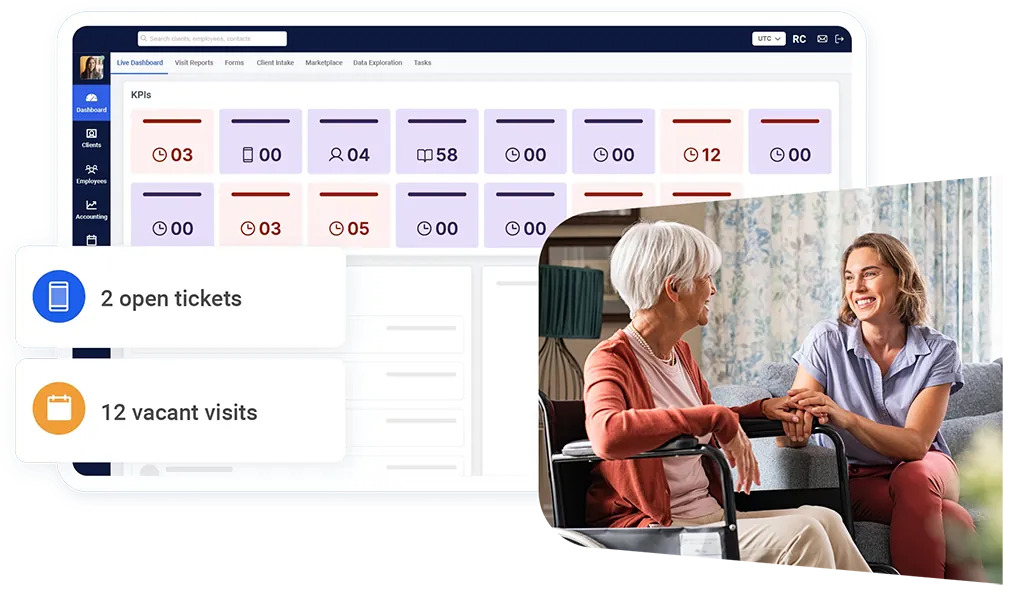
Participants might panic when they see smaller initial balances. Use your client portal to showcase rolling budgets and upcoming instalments. VisiCase’s dashboards turn abstract numbers into clear, colour-coded timelines so clients see their financial safety net.
3. Audit your pricing agility
The NDIS Pricing Arrangements and Price Limits are updated more than once a year. Manual systems risk billing at outdated rates — a fast track to rejected claims. Our NDIS invoicing software auto-updates line items, so you’re always compliant.
The Blind Spot: You Can’t See Their Funding Periods
Here is the part that catches providers out, and it deserves its own section.
Claims must be made against the NDIS funding period in which the support was actually delivered. Submit a February service in April against the new quarter’s balance and it can be rejected — not because the participant lacks funds, but because the money sat in a period that has already closed.
Now the awkward bit. A participant’s funding period breakdown is visible in the participant portal to the participant, their plan manager, and the support coordinator named in their plan. Most service providers cannot see it. You are being asked to claim against a schedule you have no direct line of sight to.
There are only three practical fixes, and all of them are process rather than software:
- Ask at service agreement stage. Build funding period type and start date into the agreement conversation rather than discovering it at claim time.
- Claim close to delivery. The longer the gap between the shift and the claim, the higher the chance the period has rolled.
- Keep the plan manager in the loop. For plan-managed participants they hold the visibility you lack, and a standing monthly balance check costs one email.
Software cannot conjure data the NDIA does not expose. What it can do is make sure the claim you submit carries the correct service date, so it lands in the right window automatically instead of defaulting to whenever your admin got to it.
How Technology Turns Change into Opportunity
Let’s be real: managing four annual plans is easier than juggling sixteen quarterly ones. That’s where robust systems shine.
- Automated alerts: get notified when a client’s NDIS funding period resets, so you can prompt timely service bookings.
- Bulk claims processing: submit a quarter’s worth of invoices in one click, with built-in checks for missing details.
- Real-time reporting: spot trends like consistently underspent transport budgets — then adjust service offerings proactively.
One provider using our platform cut payment delays by 40% simply by syncing their rostering and invoicing modules. When support workers clock out, the system automatically generates claims against the correct funding window.
The Bottom Line for Your Business
Change often feels daunting, but NDIS funding periods could be your secret weapon. Smaller, predictable cash injections make budgeting simpler, while participants’ reduced financial stress fosters longer-term client relationships.
We’ll be straight about the trade-off, though. Quarterly instalments smooth your revenue but tighten your margin for error on claim timing. Providers who were already claiming weekly barely noticed the change. Providers who batched claims monthly or quarterly have had a harder year of it.
At VisiCase, we’ve baked these updates into our NDIS finance software so you’re ahead of the curve. From auto-adjusting funding periods to PRODA-compliant bulk uploads, we’re here to ensure your team spends less time on admin and more on life-changing care.
Ready to make quarterly funding work harder for you? Book a walkthrough with the VisiCase team and we’ll map your current claiming rhythm against your clients’ funding periods—no cake-splitting required.
Frequently Asked Questions
What is the main difference between NDIS Employment Support and Supported Employment?
The primary difference lies in the employer and the funding type:
- Employment Support (Open Market): Helps participants find and keep a job with an external employer. It is funded under Capacity Building (CB: Employment) and provides short-term 1:1 job coaching aimed at independent, open employment.
- Supported Employment (ADE): The participant works directly for the provider organization (such as an Australian Disability Enterprise or social enterprise). It is funded under Core Supports (Supports in Employment) and offers ongoing, daily workplace support and coaching.
How are wages calculated for supported employees in an ADE?
Supported employees working for a provider or ADE are paid a wage under the Supported Employment Services Award. Wages are typically determined using the Supported Wage System (SWS) or approved wage assessment tools, which assess an individual’s productivity relative to an open-market standard.
How is NDIS Supported Employment funded vs. Employment Support?
- Employment Support: Funded under Capacity Building (CB: Employment). This funding focuses on skill-building, resume preparation, job seeking, and short-term post-placement support.
- Supported Employment: Funded under Core Supports (Supports in Employment). This funding covers ongoing, day-to-day dynamic on-the-job support required to sustain employment within a social enterprise or ADE.
Can an NDIS participant transition from Supported Employment to Open Employment?
Yes. Supported employment and open-market employment support are not mutually exclusive; they form a spectrum of opportunity. A participant can build confidence, social skills, and vocational capabilities in a supported environment (ADE) and later utilize Capacity Building (CB: Employment) funding to secure open-market employment.
Why do NDIS providers need specialized software for disability employment services?
Disability employment providers manage complex compliance requirements, including dual funding types (Core vs. Capacity Building), variable staffing ratios (1:1 vs. 1:many), award-specific payroll rules (Supported Employment Services Award), and strict NDIS goal-tracking evidence. Software like VisiCase streamlines rostering, billing, payroll, and audit readiness in a single platform.