NDIS Provider Registration: A Complete Guide for Australian Disability Service Providers
Learn how NDIS provider registration works in 2026: requirements, audit pathways, costs and timelines for Australian disability service providers.



If you are building a disability services business in Australia, understanding NDIS provider registration is one of the most important steps you will take. Registration determines which participants you can support, what supports you can deliver, and what compliance obligations sit on your shoulders from day one.
NDIS provider registration is the formal process by which the NDIS Quality and Safeguards Commission (the NDIS Commission) approves a provider to deliver funded supports and services under the National Disability Insurance Scheme (NDIS). Registered providers must meet the NDIS Practice Standards, pass an independent quality audit, and satisfy the Commission that the organisation and its key personnel are suitable.
As of 1 July 2026, mandatory NDIS provider registration expanded significantly. Supported Independent Living (SIL) providers and NDIS platform service providers must now be registered to operate legally. With more providers entering the scheme and registration requirements tightening, now is the right time to understand exactly what registration involves, how much it costs, and how to get it right.
What Is NDIS Provider Registration?
NDIS provider registration is an accreditation process administered by the NDIS Quality and Safeguards Commission. Providers who successfully complete registration are listed on the public NDIS Provider Register, which participants, their families, and plan managers use to find approved services.
A registered NDIS provider has been assessed against the NDIS Practice Standards relevant to the supports they deliver. These standards set the minimum quality and safety requirements for things like person-centred support, provider governance, risk management, incident management, and complaints handling.
Registration is granted for three years and is subject to conditions. Providers must maintain those conditions throughout the registration period, not just at the time of audit.
Registered vs Unregistered NDIS Providers: Key Differences
Not every provider needs to be registered. The NDIS allows unregistered providers to operate in certain circumstances, but the distinction matters for the participants they can serve.
| Feature | Registered Provider | Unregistered Provider |
|---|---|---|
| Participants served | Agency-managed, plan-managed, self-managed | Plan-managed and self-managed only |
| Quality audit required | Yes | No |
| Listed on Provider Register | Yes | No |
| Must meet NDIS Practice Standards | Yes | Must still follow NDIS Code of Conduct |
| Can deliver high-risk supports (SIL, SDA, restrictive practices) | Yes (with correct registration groups) | No |
| Can deliver behaviour support | Yes (registered practitioners) | No |
The key point: if you want to support participants whose funding is managed by the NDIA (the government agency), you must be a registered NDIS provider. Unregistered providers can only work with participants who self-manage or use a plan manager to handle their funds.
When Is NDIS Provider Registration Mandatory?
NDIS provider registration is required in the following situations:
- Delivering supports to participants with NDIA-managed (agency-managed) funding
- Providing Supported Independent Living (SIL) supports
- Providing Specialist Disability Accommodation (SDA)
- Delivering NDIS platform services (online platforms matching participants to workers)
- Using regulated restrictive practices as part of supports
- Developing or implementing behaviour support plans
- Providing specialist behaviour support services
- Providing plan management services
From 1 July 2026, SIL providers and platform service providers must be registered. Existing SIL providers who had not yet registered were required to apply by 1 October 2026 or cease providing SIL services.
This expansion is part of a broader reform effort by the Australian Government to strengthen provider quality and participant safety across the NDIS. Further mandatory registration changes are expected in coming years as the reform agenda progresses.
Understanding NDIS Registration Groups
NDIS registration groups are categories of supports and services that providers can be registered to deliver. Each registration group corresponds to a specific type of support, and each group has its own quality and audit requirements.
When you apply for NDIS provider registration, you nominate the registration groups that match the supports you plan to deliver. Your selection directly determines which participants you can serve and which audit pathway applies to your application.
Two audit pathways exist depending on the registration groups you select:
Verification audit: This pathway applies to lower-risk registration groups, such as household tasks, transport, assistive technology, interpreting, and plan management. A verification audit is primarily a desktop review of your documents and policies. It typically takes about half an audit day and costs between $900 and $1,800.
Certification audit: This pathway applies to higher-risk registration groups, including daily personal activities, high intensity daily personal activities, SIL, early childhood supports, specialist behaviour support, innovative community participation, and specialist support coordination. A certification audit involves two stages: a document review followed by a site visit with staff and participant interviews. It costs between $3,000 and $15,000 or more, depending on the size of your organisation.
If any single registration group you apply for requires certification, your entire application follows the certification pathway.
After you submit your application, the NDIS Commission sends you an Initial Scope of Audit document. This document confirms which audit pathway applies to your application. Treat it as the definitive answer.
How to Apply for NDIS Provider Registration: Step by Step
The NDIS provider registration process follows seven main steps.
- Choose your registration groups: Select the registration groups that match the supports your organisation will deliver. Be realistic. Applying for registration groups your staff are not qualified to deliver leads to audit failures.
- Set up your foundations: Before applying, make sure you have an Australian Business Number (ABN), adequate professional indemnity and public liability insurance, NDIS Worker Screening clearances for all required workers and key personnel, a PRODA account and RAM access for your authorised representative, and documented policies covering incident management, complaints, risk management, and participant rights.
- Submit your application: Log in to the NDIS Commission Portal through PRODA, go to My Applications, and complete the online form. The application includes a self-assessment against the relevant NDIS Practice Standards and questions about your organisation's suitability and key personnel. You must complete the application within 60 days of starting, or it will be deleted. There is no application fee.
- Receive your Initial Scope of Audit: After submitting, the NDIS Commission emails you an Initial Scope of Audit document confirming the audit type and what auditors will assess. Review this document carefully before engaging an auditor.
- Engage an approved quality auditor: Contact at least three approved quality auditors to compare quotes and availability. Auditor waitlists can run two to three months. Engaging early reduces delays.
- Complete your audit: Your auditor conducts the verification or certification audit. If the auditor identifies areas that do not meet the standards, they will issue corrective action requests (CARs). Each CAR cycle typically adds two to eight weeks. Address all CARs thoroughly before the auditor submits their recommendation to the Commission.
- Await the Commission's decision: Once the auditor submits their recommendation, the Commission assesses your suitability and that of your key personnel. This process typically takes four to eight weeks. Approved applicants receive a certificate of registration listing the registered supports, the registration period, and any conditions.
How Long Does NDIS Provider Registration Take?
Timelines vary based on your audit pathway, auditor availability, and how quickly you address any corrective actions.
| Pathway or Stage | Typical Timeline |
|---|---|
| Verification pathway (total) | 3 to 6 months |
| Certification pathway (total) | 8 to 12 months or more |
| Commission assessment (all types) | 4 to 8 weeks |
| Auditor waitlist (typical) | 2 to 3 months |
| Each corrective action cycle | 2 to 8 weeks (additional) |
Plan for the longer end of these ranges if you are applying for a certification pathway. Build your business plan and staffing timelines around a realistic start date, not an optimistic one.
Typical Costs of NDIS Provider Registration
There is no application fee to submit an NDIS provider registration application. However, there are real costs involved in getting registered.
| Cost Item | Verification | Certification |
|---|---|---|
| Initial audit | $900 to $1,800 | $3,000 to $15,000+ |
| Mid-term audit (18 months) | Not required | $1,000 to $6,000 |
| Renewal audit (3 years) | $900 to $1,800 | $3,000 to $15,000+ |
| Annual insurance | $1,200 to $3,000 | $1,500 to $5,000+ |
| Worker screening (per worker) | $74 to $163 (state/territory dependent, valid 5 years) | Same |
| Policies and documentation | $500 to $2,000 | $1,000 to $5,000 |
| Estimated all-in total | $2,700 to $5,500 | $5,700 to $20,000+ |
Costs vary between auditors, so getting multiple quotes is worth the time it takes. The NDIS Commission sets no price controls on audit fees.
Ongoing Obligations After NDIS Provider Registration
Receiving your certificate is the start of ongoing responsibilities, not the end of them.
Annual insurance renewal: Your professional indemnity and public liability insurance must remain current throughout your registration period.
Worker screening renewals: NDIS Worker Screening clearances are valid for five years. Track expiry dates for all workers and key personnel and begin renewal processes early. Gaps in worker screening can breach your registration conditions.
Incident management: Registered NDIS providers must have an effective incident management system. Reportable incidents must be notified to the NDIS Commission within set timeframes: the most serious incidents (such as deaths and serious injuries) require notification within 24 hours.
Mid-term audit (certification providers only): Providers on the certification pathway must complete a mid-term audit approximately 18 months into their registration period. This audit reviews progress against the NDIS Practice Standards. The mid-term audit costs between $1,000 and $6,000.
Renewal audit: Every three years, you must complete a renewal audit before your registration expires. Apply for renewal before your registration expires. Your registration remains valid while the renewal is processed.
Key personnel notifications: You must notify the NDIS Commission of any changes to your key personnel and of any events that could affect the suitability of the organisation or its key personnel.
Common Reasons NDIS Registration Applications Are Refused
Understanding why applications fail helps you avoid the same mistakes.
Generic or mismatched policies: Downloading a template policy without tailoring it to your organisation and service model is one of the most common audit failures. Auditors can identify generic policies quickly. Each policy must reflect your actual practices and the specific supports you deliver.
Weak evidence of capability: Auditors assess whether your organisation can deliver the supports you have applied for. Thin capability evidence, such as vague position descriptions or incomplete training records, creates gaps in your application.
Overreaching on registration groups: Applying for registration groups that your staff are not yet qualified to deliver leads to corrective action requests. It is better to start with the groups you can fully evidence and add others as your workforce capability grows.
Incomplete worker screening: Any gap in NDIS Worker Screening clearances for required roles can delay or stall your application.
Weak risk and incident management systems: The NDIS Commission looks closely at how you identify, record, and manage risks and incidents. A system that only exists on paper, without clear processes for staff to follow, will not satisfy auditors.
Unaddressed corrective action requests: Closing CARs superficially, without genuine evidence of change, leads to repeat failures in subsequent audit cycles.
How Workforce Management Technology Supports NDIS Compliance
Achieving and maintaining NDIS provider registration is not just about passing an audit once. It requires ongoing systems to track worker compliance, manage incidents, document supports, and roster staff appropriately.
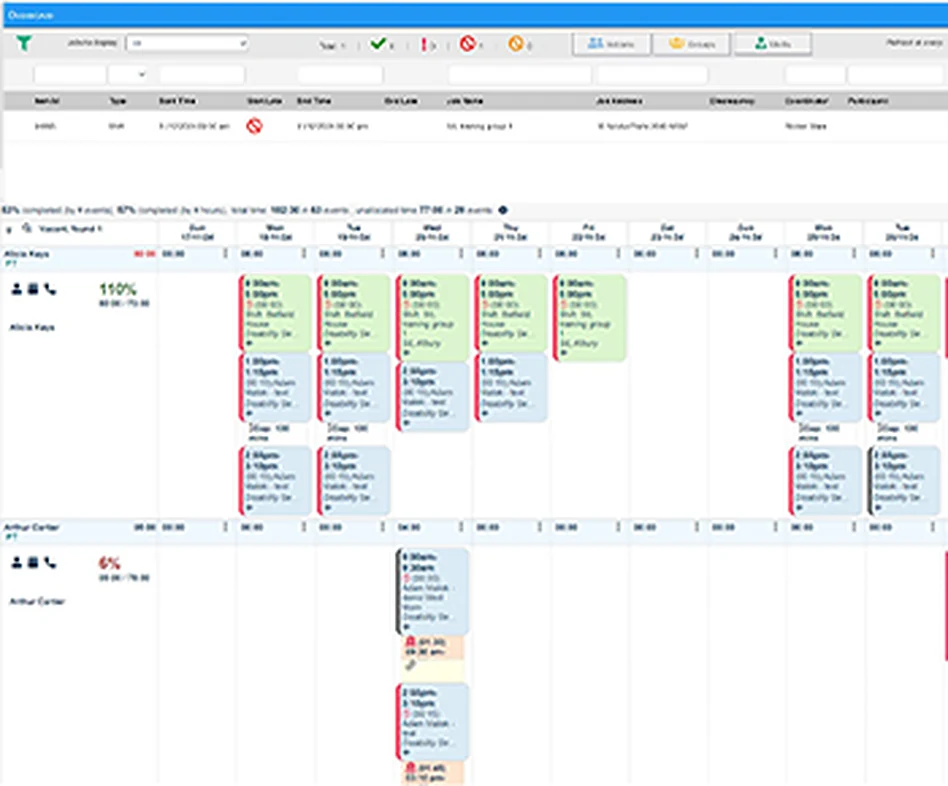
Workforce management software like VisiCase is designed specifically for NDIS and aged care providers. VisiCase helps registered providers track NDIS Worker Screening clearance expiry dates and alert managers before they lapse, maintain complete staff compliance records including qualifications, training, and police checks, manage rostering in line with SCHADS Award requirements to meet Fair Work obligations alongside NDIS compliance, record and report incidents within the timeframes the NDIS Commission requires, and generate documentation that supports audit evidence requirements.
Staying registered is an ongoing operational task. Having the right systems in place from the start makes compliance manageable rather than overwhelming. Learn more about how VisiCase supports NDIS provider compliance at visicase.com.
Frequently Asked Questions About NDIS Provider Registration
What is the difference between a registered and unregistered NDIS provider?
A registered NDIS provider has been assessed by the NDIS Quality and Safeguards Commission and meets the NDIS Practice Standards for the supports they deliver. They can serve agency-managed, plan-managed, and self-managed participants. An unregistered provider can only serve plan-managed and self-managed participants, and cannot deliver high-risk supports such as SIL, SDA, or supports involving regulated restrictive practices. Both registered and unregistered providers must follow the NDIS Code of Conduct.
How much does NDIS provider registration cost?
The NDIS Commission charges no application fee. Audit costs vary by pathway: a verification audit typically costs $900 to $1,800, while a certification audit typically costs $3,000 to $15,000 or more for the initial audit. Additional costs include annual insurance ($1,200 to $5,000+), worker screening fees ($74 to $163 per worker), and documentation preparation ($500 to $5,000). Total all-in costs range from about $2,700 to $5,500 for verification and $5,700 to $20,000 or more for certification.
How long does NDIS provider registration take?
The verification pathway typically takes three to six months from application to certificate. The certification pathway typically takes eight to twelve months or more. Auditor waitlists alone can add two to three months, and each corrective action cycle adds further time. Commission assessment after the audit takes around four to eight weeks.
What is an NDIS registration group?
A registration group is a category of NDIS supports and services that a provider can be registered to deliver. Each group has its own quality requirements and determines which audit pathway applies. Examples include Assistance with Daily Personal Activities, Household Tasks, Specialist Behaviour Support, and Plan Management. When you apply for registration, you nominate the groups that match your services.
What is the difference between a verification audit and a certification audit?
A verification audit applies to lower-risk registration groups and involves a desktop review of your policies and documents. It is typically faster and less expensive ($900 to $1,800). A certification audit applies to higher-risk groups and involves two stages: a document review followed by a site visit with staff and participant interviews. It costs significantly more ($3,000 to $15,000+) and takes longer. If any registration group you apply for requires certification, your entire application follows the certification pathway.
Do I need to be a registered NDIS provider to deliver supports?
Not necessarily. Unregistered providers can deliver most NDIS supports to participants who self-manage or use a plan manager. However, registration is mandatory to serve agency-managed participants, deliver SIL, SDA, or platform services, use regulated restrictive practices, or develop behaviour support plans. As of 1 July 2026, mandatory registration requirements have expanded to include SIL providers and NDIS platform service providers.
What happens after I receive my NDIS registration certificate?
After registration, you have ongoing obligations including maintaining NDIS Worker Screening clearances for all required staff, managing and reporting incidents within set timeframes, completing a mid-term audit if you are on the certification pathway, renewing your registration every three years, and keeping the NDIS Commission informed of changes to key personnel or events that could affect suitability.
What are the most common reasons NDIS provider registration applications are refused?
Common reasons include generic or poorly tailored policies, weak evidence of capability to deliver the nominated supports, overreaching on registration groups beyond staff qualifications, gaps in worker screening clearances, inadequate incident and risk management systems, and failure to address corrective action requests thoroughly. Thorough preparation and policy tailoring significantly improve your chances of a successful application.
What is mandatory NDIS provider registration and what changed in 2026?
Mandatory NDIS provider registration means that certain providers are legally required to be registered to operate, regardless of their funding management preference. From 1 July 2026, SIL providers and NDIS digital platform service providers must be registered. Existing SIL providers were required to apply by 1 October 2026. This is part of an ongoing reform program by the Australian Government. Further mandatory registration changes are expected in future years.
How does workforce management software help with NDIS provider registration compliance?
Workforce management software helps providers stay compliant by tracking NDIS Worker Screening expiry dates, maintaining complete staff compliance records, rostering workers in line with award obligations, recording and notifying incidents within required timeframes, and generating documentation for audit evidence. For NDIS providers, having a centralised compliance and rostering system reduces administrative burden and minimises the risk of compliance gaps that could jeopardise registration.