NDIS Workforce Capability Framework: A Provider's Guide to Core Capabilities, Recruitment and Training
Learn what the NDIS Workforce Capability Framework covers, who it applies to, and how NDIS providers can use it for recruitment, supervision and training.



If you manage support workers for NDIS participants, you have probably been told to "check the Workforce Capability Framework" without anyone explaining what that actually means day to day.
The NDIS Workforce Capability Framework is the NDIS Quality and Safeguards Commission's description of the attitudes, skills and knowledge expected of every worker funded under the NDIS. It is organised around five objectives, sets out core capabilities for different types of support work, and gives providers a shared language for recruitment, supervision and training.
This guide walks through what the Framework actually contains, who it applies to, and how a provider can put it to work without drowning in paperwork.
What Is the NDIS Workforce Capability Framework?
The NDIS Workforce Capability Framework was developed by the NDIS Quality and Safeguards Commission to turn the NDIS Code of Conduct and the NDIS Practice Standards into observable, everyday behaviours. Rather than restating rules, it describes what good support actually looks like from the participant's point of view: a worker who listens, who respects choice and control, and who knows when a situation is beyond their skill level.
According to the NDIS Commission, the Framework applies to anyone whose work is funded under the NDIS, whether they are employed directly, engaged through an agency, or self-employed. Providers, support coordinators, trainers and even participants themselves are all intended users, each reading the Framework for a different purpose.
The Five Objectives Behind the NDIS Workforce Capability Framework
Every capability in the NDIS Workforce Capability Framework sits under one of five broad objectives. These objectives describe the essential character of NDIS work: respecting the person, working within their rights, delivering safe and skilled support, acting with integrity, and contributing to a positive culture around disability support. Everything else in the Framework, from general duties through to senior leadership expectations, is built on top of these five ideas.
Thinking in terms of objectives rather than a long checklist is useful for providers, because it means a single training session, supervision conversation or incident review can be mapped back to one or more objectives instead of a list of disconnected rules.
Core Capabilities: General, Advanced and Ancillary Work
Underneath the five objectives sit the core capabilities, which describe the observable behaviours and the knowledge behind them. According to the Commission's own breakdown, core capabilities come in three sets depending on the type of work being done.
General support work covers the capabilities expected of most frontline support workers: personal care, community access and everyday assistance. Advanced support work adds extra expectations for workers handling more complex or higher-risk situations, such as complex bowel care or supporting someone with a significant behaviour support need. Ancillary work, covering roles like transport, gardening or cleaning for a participant, only needs to meet the first three objectives rather than all five, since these roles involve less direct personal support.
Additional Capabilities: Identity and Specialised Support
Core capabilities are not always enough on their own. The Framework adds two further sets of capabilities for situations where extra context genuinely changes what good support looks like.
Identity capabilities apply when a worker is supporting a participant who is Aboriginal or Torres Strait Islander, culturally and linguistically diverse, or LGBTIQA+. These capabilities exist because respectful, competent support for someone from one of these groups often requires specific cultural or lived-experience awareness that a general capability statement cannot capture. Specialised support capabilities apply instead to particular support types, health-related tasks being the clearest example, where a mistake carries a real clinical risk. Most general support workers will never need these additional sets; advanced support workers, by contrast, often do.
Organisational Capabilities for Supervisors and Leaders
The NDIS Workforce Capability Framework does not stop at frontline work. Two further capability sets cover people who manage or lead rather than deliver support directly. One set is written for frontline supervisors and managers, the people directly responsible for rostering, support and day-to-day feedback. The other is aimed at senior managers, business leaders and board members, who set the policies, culture and systems that everyone else works within.
This matters for providers because it means the Framework is not just a tool to assess support workers. A board that has never looked at its own organisational capabilities is missing half of what the NDIS Workforce Capability Framework was designed to do.
Using the Framework in Recruitment
The NDIS Commission's own guidance for providers points to several practical uses of the NDIS Workforce Capability Framework during hiring. A position description built around the relevant capability set gives candidates a clearer picture of what the role actually demands, instead of a generic duty list copied from an old template.
Providers can also share a self-assessment resource with applicants before they apply, so candidates can honestly weigh up whether the values and day-to-day demands of the role suit them. Doing this consistently, and recording which capabilities each new hire was assessed against, is also useful evidence later during an NDIS audit, when an auditor asks how a provider matches workers to the complexity of the support being delivered.
Using the Framework for Supervision and Training
Once someone is hired, the Framework keeps being useful. New workers still need to complete the mandatory NDIS Worker Orientation Module, which covers quality and safety basics for every NDIS worker. The NDIS Workforce Capability Framework then gives supervisors a shared vocabulary for everything that follows: a supervision conversation can reference a specific capability ("let's talk about how that visit matched the respect and participant choice capability") rather than staying vague.
Participant feedback fits the same pattern. Because the Framework is written from the participant's point of view, a provider can ask participants directly whether a worker's support matched "what good looks like" for a given capability, and use that feedback in performance conversations alongside the provider's own observations.
Workforce Planning With the NDIS Workforce Capability Framework
Beyond individual workers, the NDIS Workforce Capability Framework is also meant to inform workforce planning at an organisational level. A provider expanding into high-intensity daily personal activities, for example, needs to know in advance which advanced and specialised capabilities that work will require, and whether current staff already have them or need further training first.
Mapping planned service growth against the capability sets gives a provider an early warning of skills gaps, rather than discovering them only once a participant's support is already underway. It also gives a provider a clear, documented answer when asked how workforce decisions connect back to participant safety and quality of support.
Is the NDIS Workforce Capability Framework Mandatory?
No. The NDIS Commission describes the NDIS Workforce Capability Framework as recommended practice rather than a mandatory requirement, which is different from the NDIS Practice Standards that registered providers are audited against. In practice, though, many of the behaviours the Framework describes are simply a practical expression of the Code of Conduct and Practice Standards that providers already have to meet, so using it tends to make audits and incident reviews easier rather than adding a separate compliance burden.
Some providers choose to adopt the NDIS Workforce Capability Framework formally anyway, referencing it in position descriptions, supervision templates and internal policies. Doing so does not change what a registered provider is legally required to meet, but it does give staff and participants a consistent, documented way of talking about the quality of support being delivered.
How VisiCase Helps Providers Put the Framework Into Practice
Reading the NDIS Workforce Capability Framework is one thing. Keeping a consistent, auditable record of how each worker was assessed, trained and supervised against it, across a workforce that might number in the hundreds, is another problem entirely, and it is the one most providers actually struggle with.
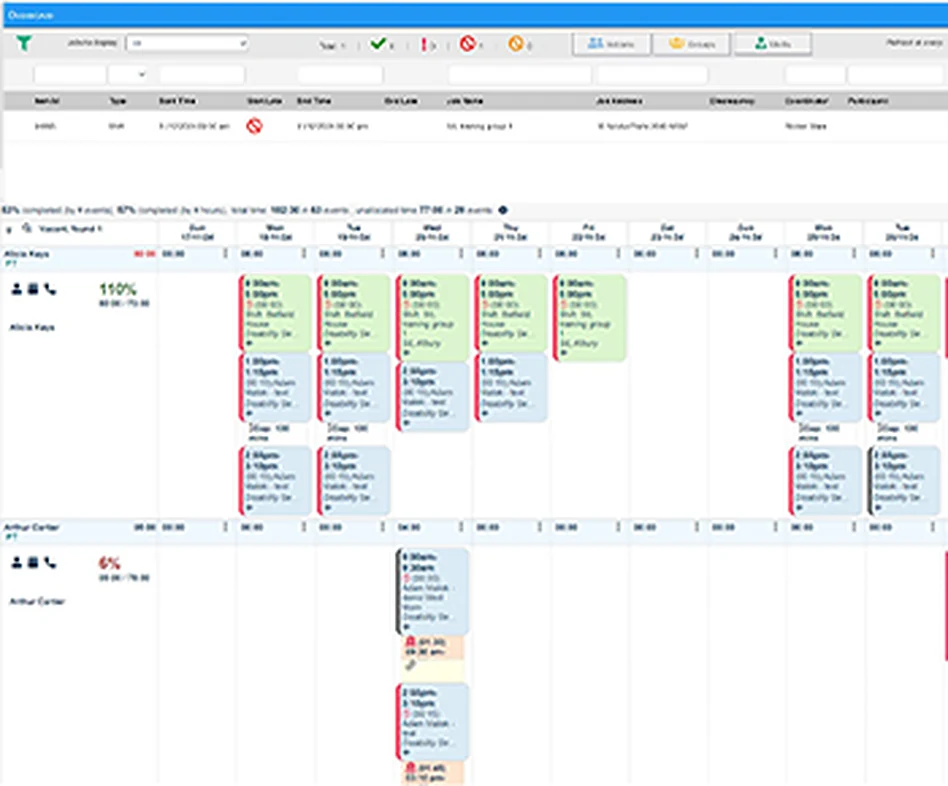
VisiCase's case and workforce management software gives providers a single place to record capability assessments, orientation and training completions, supervision notes and participant feedback against each worker's profile, so none of it depends on a spreadsheet someone forgot to update. The platform's broader feature set also connects this workforce record to rostering and incident management, so a provider can see at a glance whether the worker rostered for a complex shift actually holds the capabilities that shift requires.
Conclusion
The NDIS Workforce Capability Framework is not another audit hurdle bolted onto an already long compliance list. It is a practical description of what good NDIS support looks like, broken down by role, written so a new support worker, a frontline supervisor and a board member can each find the part that applies to them.
The providers who get the most out of the NDIS Workforce Capability Framework are rarely the ones who print it once and file it away. They are the ones who build it into everyday recruitment, supervision and training decisions, and who can show, with real records, that those decisions were made deliberately rather than left to chance.
That record-keeping habit pays off well beyond any single audit. It also makes it much easier to onboard a new supervisor, respond to a participant's concern, or explain a staffing decision to a funding body, because the reasoning is already written down rather than living only in someone's memory.
If your team is still tracking worker capabilities, orientation and supervision notes across spreadsheets and shared drives, VisiCase can bring that record into one system your coordinators, supervisors and audit team can all rely on. Explore VisiCase's features to see how it fits your organisation.
Frequently Asked Questions
What is the NDIS Workforce Capability Framework?
The NDIS Workforce Capability Framework is the NDIS Quality and Safeguards Commission’s description of the attitudes, skills and knowledge expected of every NDIS-funded worker. It was developed to translate the NDIS Code of Conduct and NDIS Practice Standards into observable, everyday behaviours, organised under five broad objectives. It covers general, advanced and ancillary support work, plus additional capabilities for identity-specific and specialised support, and organisational capabilities for supervisors and senior leaders.
Is the NDIS Workforce Capability Framework mandatory for NDIS providers?
No, the Framework is recommended practice, not a mandatory requirement. Registered providers are formally audited against the separate NDIS Practice Standards. The NDIS Workforce Capability Framework is a practical companion to those standards, and most providers use it voluntarily because it turns audited requirements into everyday behaviours that are easier to train, supervise and record.
Who does the Workforce Capability Framework apply to?
It applies to anyone whose work is funded under the NDIS, however they are engaged. This includes directly employed support workers, workers engaged through an agency, and self-employed sole traders, as well as the supervisors, managers, senior leaders and trainers who direct or support that work.
What are core capabilities under the Framework?
Core capabilities are the observable behaviours and underlying knowledge expected for a given type of support work. They are grouped into three sets: general support work, advanced support work, and ancillary work such as transport, gardening or cleaning. Ancillary roles only need to meet the first three of the five objectives, since they involve less direct personal support than general or advanced work.
What is the difference between core and specialised capabilities?
Core capabilities apply to everyone doing a given type of work; specialised and identity capabilities apply only in specific situations. Identity capabilities cover support for participants who are Aboriginal or Torres Strait Islander, culturally and linguistically diverse, or LGBTIQA+. Specialised support capabilities cover particular support types, such as health-related tasks, where extra clinical knowledge genuinely changes what safe support looks like. Most general support workers will not need either; advanced support workers often need one or both.
Does the Framework apply to managers and leaders, or only support workers?
It applies to both. Two capability sets cover organisational roles rather than direct support. One set covers frontline supervisors and managers, who are responsible for day-to-day rostering, feedback and support. The other covers senior managers, business leaders and board members, who set the policies and culture the rest of the organisation works within.
How can providers use the Framework in recruitment?
Providers can build position descriptions around the relevant capability set and share a self-assessment resource with applicants before they apply. The NDIS Commission’s own position description tools pull Framework capabilities into a downloadable template, which gives candidates a clearer, more honest picture of what a role demands than a generic duty list. Recording which capabilities each new hire was assessed against also helps during an NDIS audit.
How does the Framework relate to the NDIS Worker Orientation Module?
The Worker Orientation Module is a mandatory training course; the Framework is the broader description of expected behaviour that sits above it. Every NDIS worker must complete the Worker Orientation Module covering quality and safety basics. The NDIS Workforce Capability Framework then gives supervisors and trainers a shared, ongoing reference point for everyday supervision, feedback and further training, well beyond that one induction course.
Can participants use the Workforce Capability Framework too?
Yes. The Framework is written from the participant’s point of view, and participants are named as one of its intended users. Participants and their families can use the shared language of “what good looks like” to discuss their support with a provider and give specific, constructive feedback about a worker’s conduct, rather than a vague general complaint.
How can software help a provider apply the Framework consistently?
A case and workforce management system can record capability assessments, training completions and supervision notes against each worker’s profile in one place. Instead of tracking capability assessments, orientation records and participant feedback across separate spreadsheets, VisiCase keeps that history attached to each worker and connected to rostering, so a provider can quickly confirm that the worker rostered for a complex shift actually holds the capabilities it requires.