What Is NDIS Social and Community Participation? A Complete Guide for Providers
Understand NDIS social and community participation funding, support categories, funded activities, and how providers can manage these supports in 2026.


For many NDIS participants, the goal is not just to receive care at home. It is to live a full life in their community. NDIS social and community participation supports exist to make that possible. They fund the help participants need to get out, connect with others, build skills, and take part in everyday community life.
For providers, support coordinators, and support workers, understanding how these supports work is essential. This guide explains what NDIS social and community participation means, which support categories apply, what activities can be funded, and how providers can deliver and manage these supports effectively in 2026.
What Is NDIS Social and Community Participation?
NDIS social and community participation refers to the supports that help people with disability join in social, recreational, cultural, and civic activities alongside other community members. These supports recognise that social connection and community involvement are essential to a person's wellbeing, not extras.
Under the NDIS Operational Guidelines, social and community participation supports are designed to:
- Help participants access community groups, events, and activities
- Build the skills needed to participate more independently over time
- Support connections with family, friends, and the broader community
- Enable participants to pursue hobbies, interests, sport, and education
The supports are flexible by design. A participant might use them to attend a weekly social group, go to the gym with a support worker, volunteer at a local charity, or join a sports club. What matters is that the support helps the participant engage with their community in a way that reflects their personal goals.
The Two Main Funding Categories for NDIS Social and Community Participation
NDIS social and community participation sits across two distinct support categories. Providers and support coordinators need to understand both to claim correctly and to help participants use their funding in the right way.
Support Category 04: Assistance with Social, Economic and Community Participation
This is a Core Support category. It funds hands-on help from a support worker so a participant can take part in social and community activities they could not do safely or independently on their own.
The support worker attends the activity with the participant, going to a movie, joining a community group, attending a sporting event, or visiting friends. The funding covers the worker's time, not the cost of the activity itself (such as entry fees or memberships).
Examples include individual assistance to access a community event and eligible group-based supports. Before claiming, check the 2026–27 NDIS Support Catalogue for the current item and claim type, and the NDIS pricing schedule for any applicable price limit.
Support Category 09: Increased Social and Community Participation
This is a Capacity Building support category. Rather than hands-on assistance, it funds programs and training that build a participant's skills so they can participate more independently in community life over time.
Category 09 often covers structured group programs, skills training, social skills development, and community participation programs delivered by registered providers. The focus is on building capacity, not on providing ongoing one-to-one support.
The difference matters for billing and reporting. Category 09 supports are generally delivered as programs with set outcomes. Providers claiming under this category need to document participant progress against capacity-building goals, not just hours of support delivered.
Understanding which category applies helps participants make the most of their funding and helps providers claim and report correctly. For a broader overview of how the core support categories work together, see our guide to NDIS core supports.
What Activities Can NDIS Social and Community Participation Funding Cover?
One of the most common questions from participants, families, and even support workers is: what activities actually count? The answer is broader than many people expect.
Social and Recreational Activities
- Attending community events, festivals, and local markets
- Joining a social club, hobby group, or interest group
- Going to the cinema, theatre, or sporting events
- Participating in arts and crafts programs
Sport and Physical Activity
- Attending a gym, pool, or fitness class with a support worker
- Joining a disability-inclusive sports club or league
- Going for walks, hikes, or bike rides in the community
Education and Skill-Building
- Attending a community course or workshop
- Participating in supported adult education programs
- Building social skills through structured group programs
Civic and Volunteering Activities
- Volunteering at a local organisation
- Attending community meetings or local government events
- Getting involved in advocacy groups or community boards
Group and Centre-Based Programs
- Day programs run by registered NDIS providers
- Group outings and activities organised through community access programs
- Supported group social activities (cooking classes, art groups, music programs)
Check that the disability-related support meets NDIS funding criteria and fits the participant’s plan and goals. Participants generally pay ordinary costs such as entry fees, memberships and standard equipment. For example, a participant may pay for their own cinema ticket while using eligible funding for disability-related assistance to attend.
What Support Workers Do in This Role
Support workers delivering social and community participation supports have a different role than those providing personal care. Rather than focusing on physical assistance, the role is about enabling connection, building confidence, and helping the participant navigate their community.
In practice, this might look like:
- Picking up a participant and driving them to a community event
- Standing alongside a participant at a social group while they build confidence to interact independently
- Supporting a participant to try new activities and work out what they enjoy
- Helping a participant with communication at community venues
- Guiding a participant through group activities at a day program
Support workers in this role need strong interpersonal skills, patience, and the ability to follow a participant's lead. The goal is to increase independence over time, not to create ongoing reliance on the worker's presence.
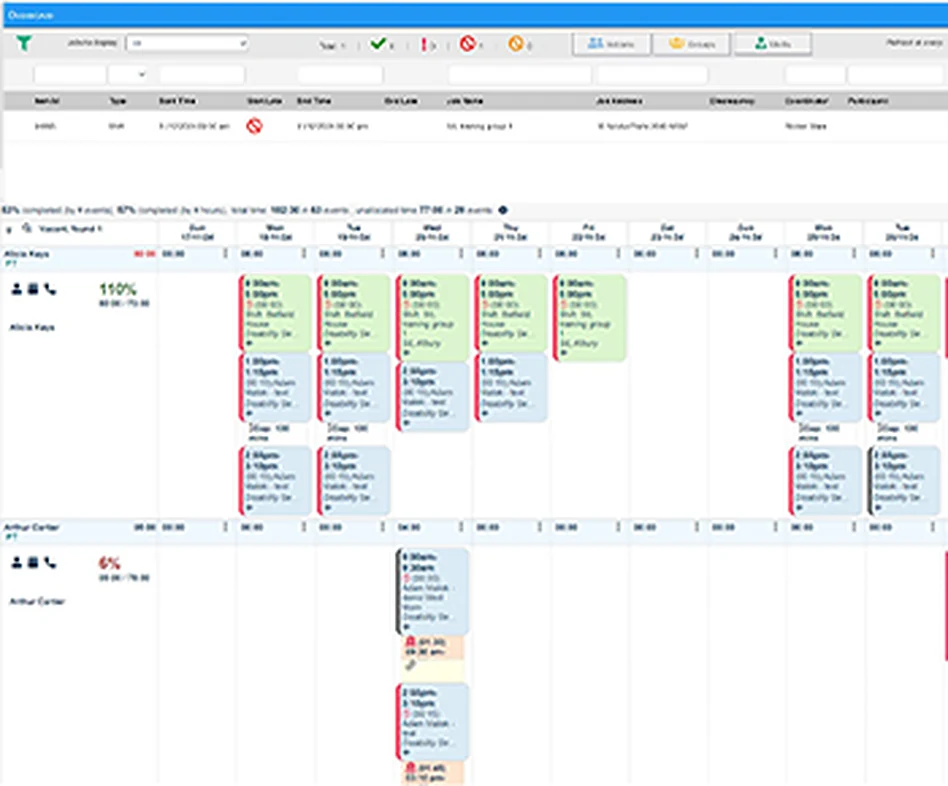
For providers, rostering support workers with the right skills to the right participants is critical. A worker matched well to a participant's personality and interests will deliver far better outcomes than a generic allocation. Well-structured NDIS rostering software helps providers make these matches consistently.
The 2026 NDIS Reforms: What Changed for Social and Community Participation?
In September 2026, the Minister made the first NDIS pricing determination under the 2026 amendments. The 2026–27 pricing schedule sets maximum prices for NDIA-managed and plan-managed supports.
Check funding eligibility, claiming and pricing separately. Use the NDIS guidance to check whether the disability-related support can be funded. Use the Support Catalogue to identify the item and claim type, and the pricing schedule to check applicable maximum prices.
Clearer rules around group versus individual supports. The reforms introduced more explicit rules about how group programs are funded and what providers can charge per participant when delivering group activities. Providers running day programs or group outings need to review their pricing and billing models against the current support catalogue.
Greater emphasis on participant goals and reasonable and necessary criteria. Supports must be clearly linked to a participant's plan goals. Plan managers and support coordinators are applying more scrutiny to social and community participation claims to ensure they link clearly to stated goals.
Check the participant’s current plan. Confirm the available budget, the funding period where applicable, and how the support is managed before scheduling or invoicing.
For support coordinators managing participants through these changes, keeping detailed progress notes is essential. Clear documentation supports plan reviews and demonstrates that funded activities are delivering outcomes. VisiCase's NDIS case management software gives support coordinators the tools to record and report on participant outcomes efficiently.
How Providers Can Manage Social and Community Participation Supports
Delivering social and community participation supports effectively requires more than a willing support worker. Providers need systems in place to roster the right staff, track support hours, manage compliance, and report on outcomes.
Accurate rostering aligned to participant goals. Every shift delivering social and community participation should be linked to the participant's specific goals and activities. Support workers need to know not just where they are going, but why, and what the participant is working toward. Rostering software that links participant goals to shift instructions ensures workers are prepared.
Real-time timesheets and clocking. Claiming under NDIS support categories requires accurate records of support hours delivered, the support type, and the location. Mobile apps that allow support workers to clock in and out in real time, record notes, and confirm delivery reduce errors and speed up claiming.
Progress notes and outcome documentation. For Category 09 Increased Social and Community Participation, documenting participant progress is not optional. Providers need to record what skills the participant practiced, how they responded, and what the next steps are. This documentation supports plan reviews and demonstrates the effectiveness of funded supports.
Compliance with the NDIS Code of Conduct and Practice Standards. Support workers delivering community access and social participation supports must comply with the NDIS Code of Conduct at all times, including when off-site at community venues and activities. Providers need to ensure workers understand their obligations regardless of setting.
Invoicing and claiming accuracy. Claiming the wrong support category, applying the wrong rate, or submitting claims without supporting documentation creates problems with the NDIA, plan managers, and self-managing participants. Getting the billing right the first time saves significant administrative time.
Common Challenges When Delivering Social and Community Participation Supports
Providers consistently encounter a few recurring challenges when delivering social and community participation supports.
Challenge: Workers not documenting community-based shifts well. When a support worker is out in the community with a participant, stopping to write detailed notes is not always practical. Many providers find that community-based shift notes are thin compared to in-home support notes.
Solution: Give workers a mobile app that makes recording simple and fast. Voice-to-text notes, pre-built note templates for community access shifts, and photo documentation options all reduce the friction of recording.
Challenge: Matching workers to participants for community access. Not every support worker is comfortable or confident in diverse community settings. Matching matters more in community-based roles than in predictable in-home environments.
Solution: Build community access experience and comfort level into your worker profiles. Use rostering tools that let coordinators filter workers by relevant experience when filling community access shifts.
Challenge: Tracking participant progress under Category 09. Category 09 supports are supposed to build capacity. But without clear outcome tracking, providers have no evidence that the supports are working, which creates risk at plan review time.
Solution: Set clear, measurable goals at the start of each Category 09 program. Record specific observations against those goals at every shift. Use case management tools that link notes to goals, so progress is easy to report at plan review.
Challenge: Keeping up with 2026 reforms and catalogue changes. The support catalogue and NDIS rules have changed frequently. Providers have struggled to keep billing and service agreements up to date.
Solution: Assign a compliance lead within your organisation to review NDIS guideline updates regularly. Subscribe to NDIS provider updates and ensure your team has access to the current support catalogue. When in doubt, check the NDIS Operational Guidelines on social and community participation.
Managing NDIS Social and Community Participation Supports with VisiCase
Managing social and community participation supports requires the right systems behind your team. VisiCase gives NDIS providers purpose-built rostering, scheduling, and case management tools that make it easier to deliver community access supports, track outcomes, and stay compliant.
From matching the right support worker to each participant, to recording shift notes in the community and generating progress reports for plan reviews, VisiCase supports every step of the delivery cycle. Book a free demo to see how VisiCase can support your team.
Frequently Asked Questions
What is NDIS social and community participation funding?
NDIS social and community participation funding covers the supports that help people with disability join in social, recreational, civic, and community activities. It includes both hands-on support from a support worker (Core Supports, Category 04) and programs that build skills and independence over time (Capacity Building, Category 09).
What activities can NDIS social and community participation funding be used for?
Funded activities include attending community events and social groups, joining sports clubs and fitness programs, volunteering, participating in arts programs, attending day programs, and going on community outings with a support worker. The activity must be reasonable and necessary and linked to the participant's NDIS plan goals.
What is the difference between support category 04 and 09 for social participation?
Category 04 (Assistance with Social, Economic and Community Participation) is a Core Support that funds a support worker to help a participant do activities they cannot do safely alone. Category 09 (Increased Social and Community Participation) is a Capacity Building support that funds programs and training designed to build independent participation skills over time.
Can NDIS social and community participation funding pay for entry fees and activity costs?
Participants generally pay ordinary activity costs such as admission, memberships and standard equipment. NDIS funding may cover disability-related assistance to take part if the support meets the funding criteria and fits the participant’s plan.
Who can deliver NDIS social and community participation supports?
NDIA-managed participants generally use registered providers. Plan-managed and self-managed participants can generally choose registered or unregistered providers where registration is optional for that support. The NDIS Code of Conduct applies to registered and unregistered providers and their workers. Registered providers must also meet the applicable NDIS Practice Standards.
How have the 2026 NDIS reforms affected social and community participation supports?
The 2026–27 NDIS pricing schedule sets maximum prices for NDIA-managed and plan-managed supports. The Support Catalogue identifies support items and claim types. Check the participant’s plan and current NDIS guidance to confirm whether the disability-related support can be funded.
Can a support worker accompany a participant to any community activity?
A support worker can help a participant attend an activity when the disability-related assistance meets NDIS funding criteria and fits the participant’s plan. Check the applicable support item for the assistance delivered. Ordinary activity costs generally remain the participant’s responsibility.
How do providers claim for social and community participation supports?
For NDIA-managed supports, registered providers use the myplace provider portal and the applicable Support Catalogue item. For plan-managed supports, invoice the plan manager. For self-managed supports, invoice the participant or their nominee. Keep records of what was delivered and check that the claim or invoice matches the service agreement and applicable pricing rules.
What documentation do providers need to keep for social and community participation supports?
Providers should keep accurate records of each support delivered, including the date, support worker, participant, support category, hours, and a brief description of the activity and participant's response. For Category 09 supports, progress notes documenting skill development against plan goals are particularly important for plan reviews and audits.
How can rostering software help providers deliver social and community participation supports?
Purpose-built NDIS rostering software helps providers match support workers to participants based on skills, experience, and participant preferences, schedule community access shifts, track support hours in real time, generate progress notes, and automate claiming. This reduces administrative burden and helps providers focus on delivering quality supports. VisiCase's NDIS rostering and case management tools are designed specifically for these workflows.